
⏱️ This edition of the West Vic Brolga newsletter is a five-minute read.
👋🏻 Happy Friday Brolga readers, Zara with you, ready to jump into the latest edition.
In today’s newsletter, I spoke to organiser Joan Goldsmith for a preview of this weekend’s Buninyong Film Festival.
I also spoke to VicGrid CEO Alistair Parker, Australian Energy Infrastructure Commissioner Tony Mahar and Waubra farmer David Clark to break down the new guidelines for renewable energy projects in the state.
Darcie caught up with Aaron Schembri, the brains behind Daylesford Japanese restaurant Kadota, to hear about his journey training as a chef at a three-Michelin-star restaurant in Osaka.
Quick hits: I put together a guide to some great spots to find a big breakfast across the region.
🤝 Finally, we’re seeking support from readers to keep us hunting stories and collecting news each week.
Any donation, big or small, makes a difference in keeping local journalism in our patch ticking.

Click this banner to donate!
Daylesford and Buninyong headlines 🗞️
Aaron Schembri started cooking as a way to avoid doing the dishes in a “free range” single-parent household in Daylesford, but it’s since taken him to Osaka to train at three-Michelin-star restaurant Hajime, and back home to launch Japanese restaurant Kadota.
🗣️: “My mum was a jazz singer, and she’d work quite late,” he told the Brolga.
Schembri said his mother was strict on chores being done in her absence.
“Cooking seemed like the easiest task, to be honest,” he said with a laugh. “It was the perfect way to explore with flavours and have fun. And not have to do the dishes.”
The restaurant is named after his wife and business partner Risa Kadota, originally from Okayama.
Meeting Risa: An ill-fated journey to Cairns left Schrembi and each of the friends travelling with him penniless.
🗣️: “We were sleeping on the beach. I even made a deal with a friend’s brother to swap his guitar for $40 to get food.”
Schembri eventually got a job cooking at a restaurant neighbouring a hostel. He negotiated free accommodation in return for work and it was here he met fellow traveller Risa Kadota.
By the end of their time there, Kadota had agreed to accompany Schembri back to Daylesford.
Training at Hajime: Schembri described renowned chef Hajime Yoneda’s eponymously named restaurant as his favourite in the world. Its theme is “Dialogue with the Earth”, with the menu listing concepts rather than ingredients. Schembri says “those guidelines give purpose and identity and reason, other than it’s in season and local”.
Schembri exchanged emails with Yoneda for a year before being offered the apprenticeship in 2015. The work was gruelling, with the team of eight staff working 19 to 20 hour shifts.
The differences: Schembri said food systems in Japan are highly organised, with fresh scallops from the north of the country deliverable to the south within an hour.
🗣️: “From a food culture point of view, they’ve got a real identity. Real depth and focus on the ingredient and presenting an ingredient in the best way possible.”
He says there is “little wastage”, giving the example of calamari: “It’s so common in Japan to have squid innards for sale. In Australia, we’d just have the hood and the legs.”
Bringing it home: The couple’s culinary plans back in regional Victoria were put on hold due to Covid lockdowns.
“We went a bit stir crazy, but it was also our first time spending real time together,” Schembri says. “We never had the same days off before.”
They opened Kadota about five years ago.
During lockdowns the two had started cooking together regularly at home, drawing from the Japanese and Italian cuisine of their respective childhoods.
🗣️: “We decided we had to get there, no matter what happens,” Schembri said.
The restaurant offers Kaiseki-style dining, which is a multi-course menu emphasising presentation, seasonal ingredients and artistry that balances texture, colour and flavours. Even the tableware is selected on these principles.

🎞️ Spanish thrillers to John Lennon documentaries: Buninyong Film Festival returns for its 32nd year
Arthouse cinema, mulled wine and a village atmosphere will return to Buninyong this weekend as the Buninyong Film Festival celebrates its 32nd year.
Bringing the world to Buninyong: Held at Buninyong Town Hall on Friday and Saturday (June 19 and 20), the festival has grown from screening five films when it began in the 1990s to a seven-film program featuring Australian and international productions.
Festival organiser Joan Goldsmith said the event had become a long-running tradition for film lovers across the region.
What’s on the schedule? This year's program opens on Friday night with acclaimed Australian director Warwick Thornton's latest film, Wolfram, followed by Iranian thriller It Was Just an Accident.
Saturday's lineup includes Spanish-French thriller Sirāt, a documentary on the British supermodel Twiggy, Australian drama Pasa Faho, Brazilian political thriller The Secret Agent, and One to One, a documentary following John Lennon and Yoko Ono in 1970s New York featuring newly restored footage.
🗣️ "We're hoping that Warwick's actually going to introduce his film via telephone," Goldsmith told the Brolga.
Goldsmith said film selections were researched throughout the year, drawing on festival screenings, reviews and recommendations.
The age of Netflix: While streaming services have transformed how people watch movies, Goldsmith said the festival's focus on arthouse films offered audiences a chance to watch something different and “come out and enjoy the cinematic experience”.


West Vic’s headlines 🗞️
If wind, solar, battery and hydro developers want to build major projects in Victoria and access the state’s electricity grid they need to engage early, be transparent and leave communities better off.
That’s according to new guidelines released by the state government this week, following the finalisation of renewable energy zones, three of which are in western Victoria.
The response: Local farmer David Clark, who helped establish the community benefit fund associated with the Waubra Wind Farm two decades ago, said the new rules will mean western Victoria finally “gets some consistency”.
CEO of VicGrid, Alistair Parker, told the Brolga every expectation within the guidelines could be traced back to issues raised directly by communities, councils and landholders.
🗣️ “I kind of think of it under three headings: treat people with respect and in an open and transparent way, give people the information they need, and make sure you've got a proper scheme to share benefits with the wider community,” he said.
What were the issues? Questions around non-disclosure agreements, decommissioning responsibilities and insurance liability have consistently been among the issues West Vic residents have sought clarity on.
The fixes: VicGrid’s new guidelines specifically address these issues. Developers are expected to avoid contractual clauses that “unreasonably restrict” landholders from discussing projects with their neighbours.
The guidelines also require developers to provide financial support for independent legal and financial advice, and clarify who is responsible for costs such as insurance.
New expectations around insurance have been introduced, requiring developers to ensure farmers hosting projects, or their neighbours, are not left exposed to increased public liability risks because of renewable energy infrastructure.
Landholder agreements will also require developers to assure how projects would be decommissioned if the company was to “go bust”.
🗣️ “They could have a trust or some sort of sinking fund that will actually deal with decommissioning,” Parker said.
How will they be enforced? The new standards will be tied directly to developers’ ability to connect to Victoria’s transmission network.
Initially, compliance will be enforced through connection agreements. Longer term, developers seeking access to the grid will need to demonstrate they are meeting the expectations.
🗣️ “There would be penalties if they didn't, but then in the extreme case they just wouldn't be able to get access to the network,” Parker said.
Accountability a must: The focus on accountability has been welcomed by Australian Energy Infrastructure Commissioner Tony Mahar, whose office regularly deals with complaints and concerns from communities hosting major energy projects.
Mahar said many of the issues addressed in the guidelines reflected concerns being raised directly with his office. He told the Brolga the success of any engagement process came down to trust, relationships and genuine communication.
🗣️ “Providing clear and balanced context, so people fully understand what is being proposed,” he said. “Genuine engagement - being present in the community, having face-to-face conversations and building relationships, rather than relying solely on emails or letterbox drops.”
Keeping money local: The Waubra Wind Farm fund is one of the earliest examples of a renewable energy project sharing benefit funding with its host community.
David Clark believes the most important role local communities had in the rollout of the guidelines was ensuring the money from community benefit funds was “for the community to control”.
🗣️ “It's really important that the community actually has effectively the final say in where the money goes,” he said. “You've got the money for 25 years, you really should be planning some really big changes in your community.”


On Your Feed 📱
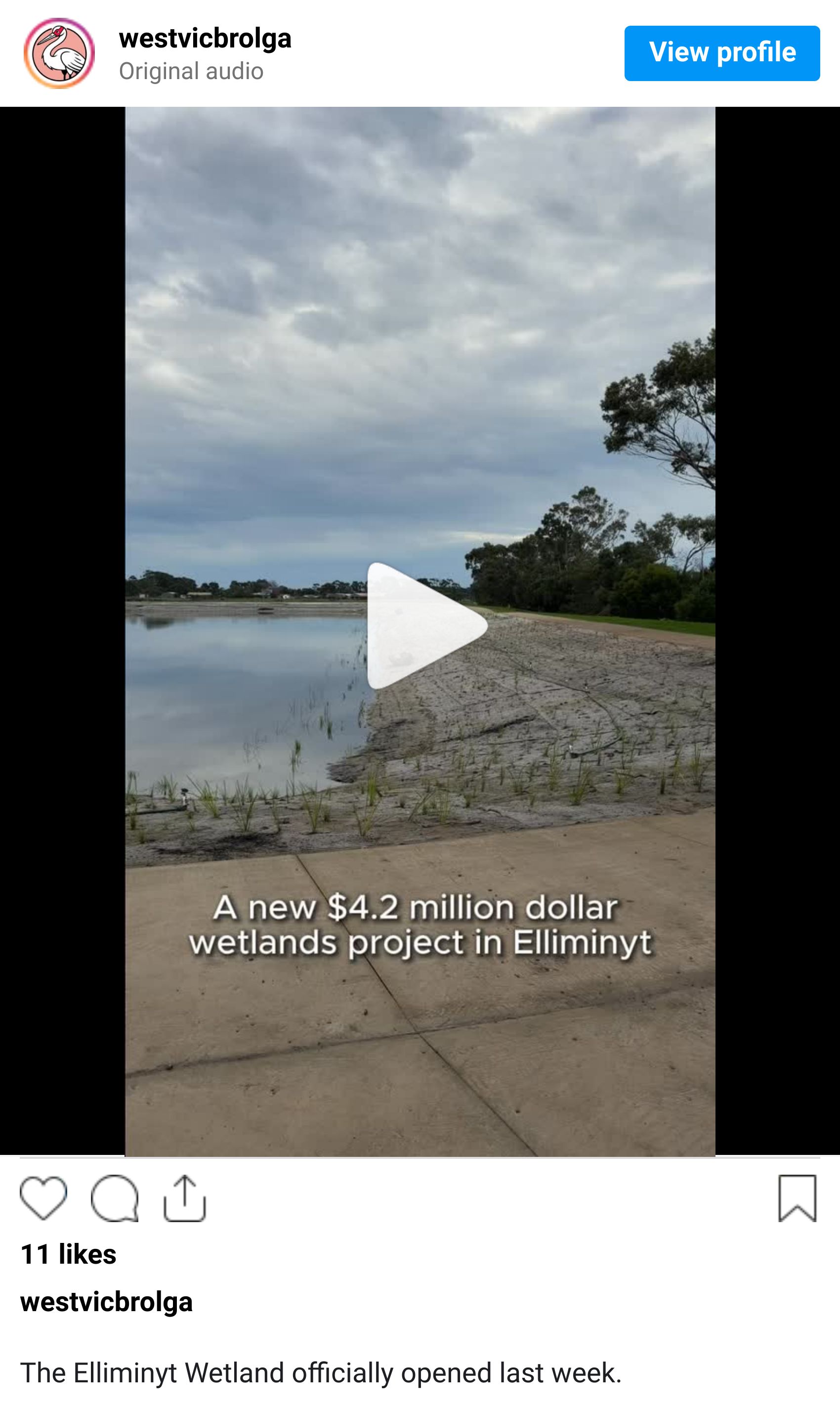
I took a stroll around the newly-opened Elliminyt Wetland this week - check out the video below to learn more about how the wetland works and the benefit to nearing houses.


Click this banner to donate!
Thanks for reading today’s newsletter folks.
If you have the means, a donation to support the work Darcie and I do would be greatly appreciated, but even just reading our newsletter helps. We recently ticked over 7,000 subscribers to the newsletter which is fantastic.
With so many of you now reading, we’re eager to hear from you with any comments, feedback or news tips you have for us. Darcie and I are just on the other side of this email.
Cheers,
Zara