

⏱️ This edition of the West Vic Brolga newsletter is a five-minute read.
👋🏻 Hello Brolga readers, Zara here. Happy Friday.
In today’s newsletter, we’ve got:
🗣️ A profile with Eureka MP Michaela Settle;
🍷 The history of a Grampians winery;
🌊 Some local trivia on the Twelve Apostles;
🎤 And opinions from locals on the streets of Daylesford.
Quick hits: We’ve tracked down the top picks for family friendly activities next month.

Central Highlands headlines 🗞️
Michaela Settle was a sheep farmer in another life. Now, the minister for Eureka is the politician accountable when a farming crisis hits, the person who handles the state’s water companies and the one who announces funding for new projects.
With a state election on the horizon, she has until November 28 to convince voters she’s the right person to hold the seat.
Portfolio positions: Settle, who has held the seat since 2018, gained her ministerial roles in April and August this year.
“I was absolutely determined when I became a minister not to lose connection with my local area, because frankly speaking, these are the people who have elected me and these are the people that I need to represent,” she said.
“I was a sheep farmer in another life, and my mother was a senior water management bureaucrat for many years. They’re portfolios that really relate to my electorate as well.”
A look into Eureka: Previously called Buninyong, a 2022 redistribution added Bacchus Marsh into the electorate. Soon after, a debate over just how to classify Eureka began: was it metro? Peri-urban? Or was “regional” sufficient?
“Bacchus Marsh is growing really quickly,” said Settle, “so we need to make sure that we can keep that infrastructure up as it grows. We've got a lot of suburbs now that are new, I need to make sure I can get public transport there for them”.
Settle outlined improved footpaths as well as specific needs for the types of locals moving to certain suburbs.
“Brown Hill, for example, has a lot of young families moving in, so we also need to make sure we've got schools and kinders that they need there.”
Main issues: Cost of living and road quality also come up everywhere. Both topics are of major concern for all the candidates in the battle for Eureka, and Settle is exposed to them every day across her electorate.
“I spend my life on the road, and they’re not good enough,” she said.
State of things: According to the Victorian Auditor-General's office, 48 percent of the state’s road network was in poor or very poor condition in 2024, compared to 39 percent in 2021, due to heavy traffic and freight loads and severe weather conditions like rain and floods.
Labor has been in power since 2014. Recent commitments from the government in Eureka include a $25 million intersection upgrade to two intersections in Bacchus Marsh in 2023 and upgrades to 1.5 kilometres of the Midland Highway near Elaine in 2025.
Liberal candidate for Eureka Emma Muir recently criticised Labor and the current state of the region’s roads on social media, saying the area’s potholes and poor roads are a result of a government that is “too comfortable” and takes communities like Eureka “for granted”.
Broader issues: Settle took on the agriculture portfolio in April this year, as farmers emerged from two years of severe drought. “I know that impacted the local community very heavily,” she said.
Attention is now on biosecurity and the arrival of H5 bird flu in Australia. Settle said it had the potential to devastate the poultry industry in the Golden Plains Shire.
Eureka voters will decide at the election on November 28 whether she keeps both roles.

Best’s Wines Great Western has been operational in the Grampians since 1866. With over 39 grape varietals, the direct origin of some still remains unknown despite visits from French experts and DNA testing.
Nicole Thomson and her husband, Ben, are the vineyard’s fifth-generation owners and are pushing the vineyard’s story beyond 106 years of single-family ownership.
The background: Best’s Wines was originally purchased by Henry Best in the late 1800s, and he planted each tree on the property himself. He died in 1913, leaving the property to his son Charles.
The Thomson family purchased the land from Charles in 1920, and have held onto it for the last century - mostly.
“During the depression, the vineyard was actually taken by the bank. The Thomsons bought another property - that they named Misery Farm,” she said with a laugh. “But the bank couldn’t find a buyer, so it went back to them”.
Thomson told the Brolga it’s been fascinating to compare the experience of each generation - from horse and cart manual picking, to machinery with air conditioning.
A stroke of luck: While the vineyard was being run by Henry Best, Thomson said an invasive North American insect swept Europe - called phylloxera.
These aphids burrow into the root of vines, laying eggs and feeding on them. It was devastating to the global wine industry in the mid-19th century.
It took out nearly half of France’s vineyards.
However, Best’s Wines remained phylloxera-free, and as a result, became home to some of the oldest surviving vines in the world.
The blends: These varietals are in the Nursery Block, and include Pinot Meunier, Pinot Noir and award-winning Riesling.
Thomson said in the 1970s, a wine expert from France visited the property to identify each grape by feel and taste. The remainder were tested - and to this day, 8 varietals grown on the property remain unknown.
Ongoing work: Thomson said they have faced their own struggles at the helm of the century-old vineyard. A black frost no one predicted hit the region in 2017, and the winery lost almost all of that year’s grapes.
Recent fires in the region have been another source of stress, with several of their neighbours dealing with smoke taint and property damage. Thomson’s advice?
“If you’re going to start a winery, make sure you have a spare million dollars.”
What next? The winery’s cellar’s door remains open to visitors, and this weekend the property will be hosting live music, local food, market stalls and family activities as part of the month-long Grampians Wine Festival.


South west stories 🗞️
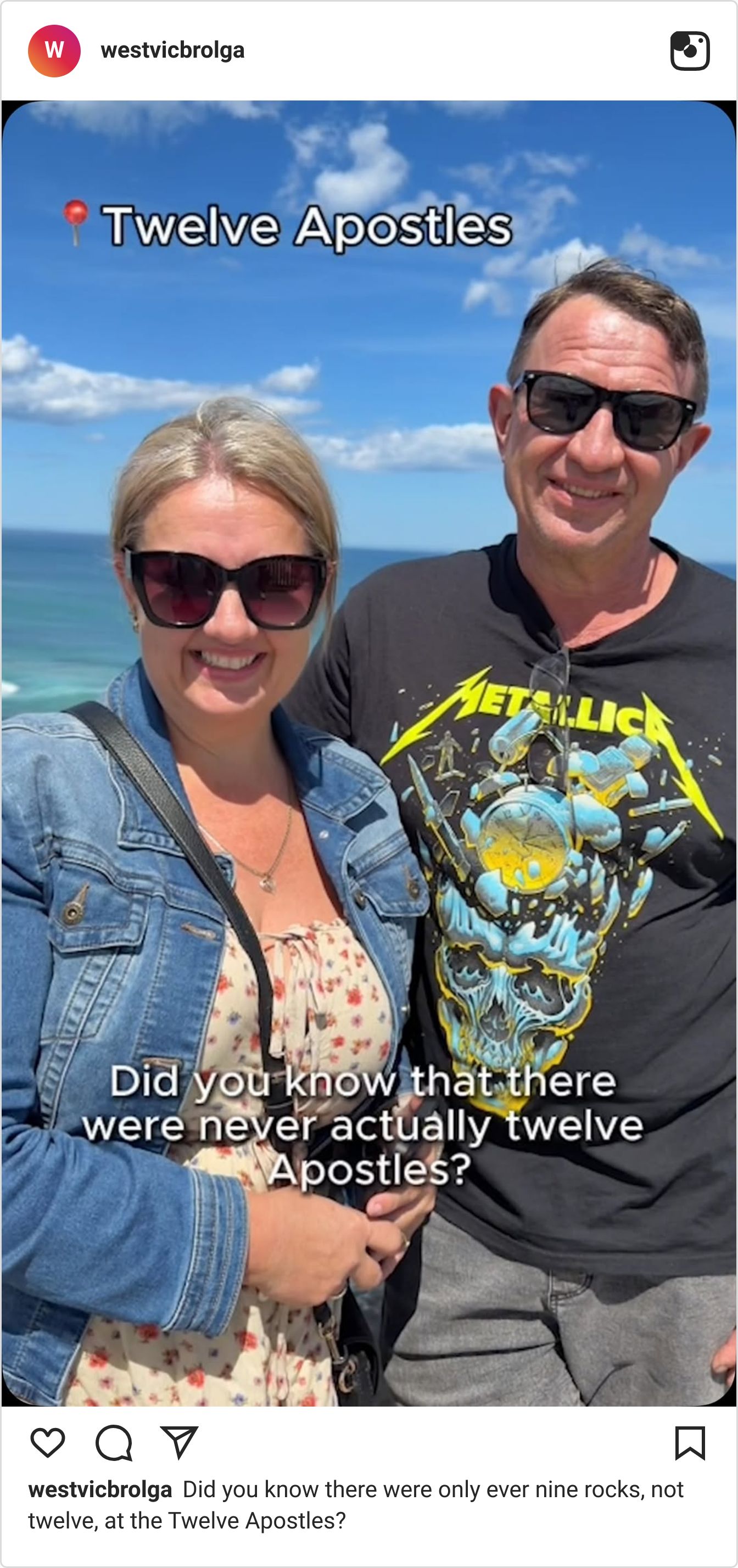
During my trip to the new visitor centre, I put visitors and locals to the test on their knowledge of the famous rock formations - did they know there were never twelve and do they remember then two of them collapsed? Watch the video below to see how they went.
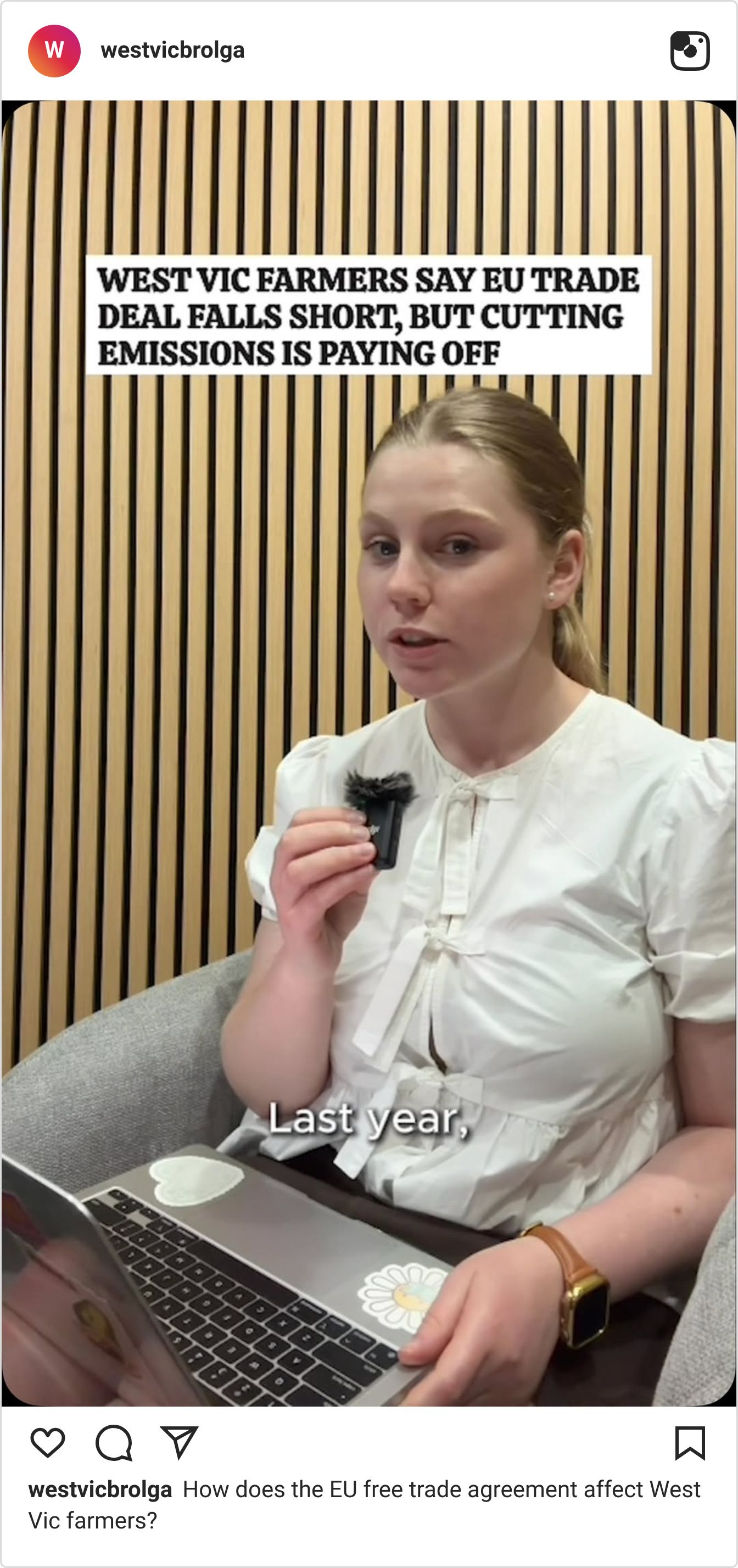
How does the EU free trade agreement affect West Vic farmers?
The new EU free trade agreement is expected to be signed in late 2026 or early 2027, and could take effect from late 2027. I looked into what local farmers actually think of the deal in the video below.

On Your Feed 📱
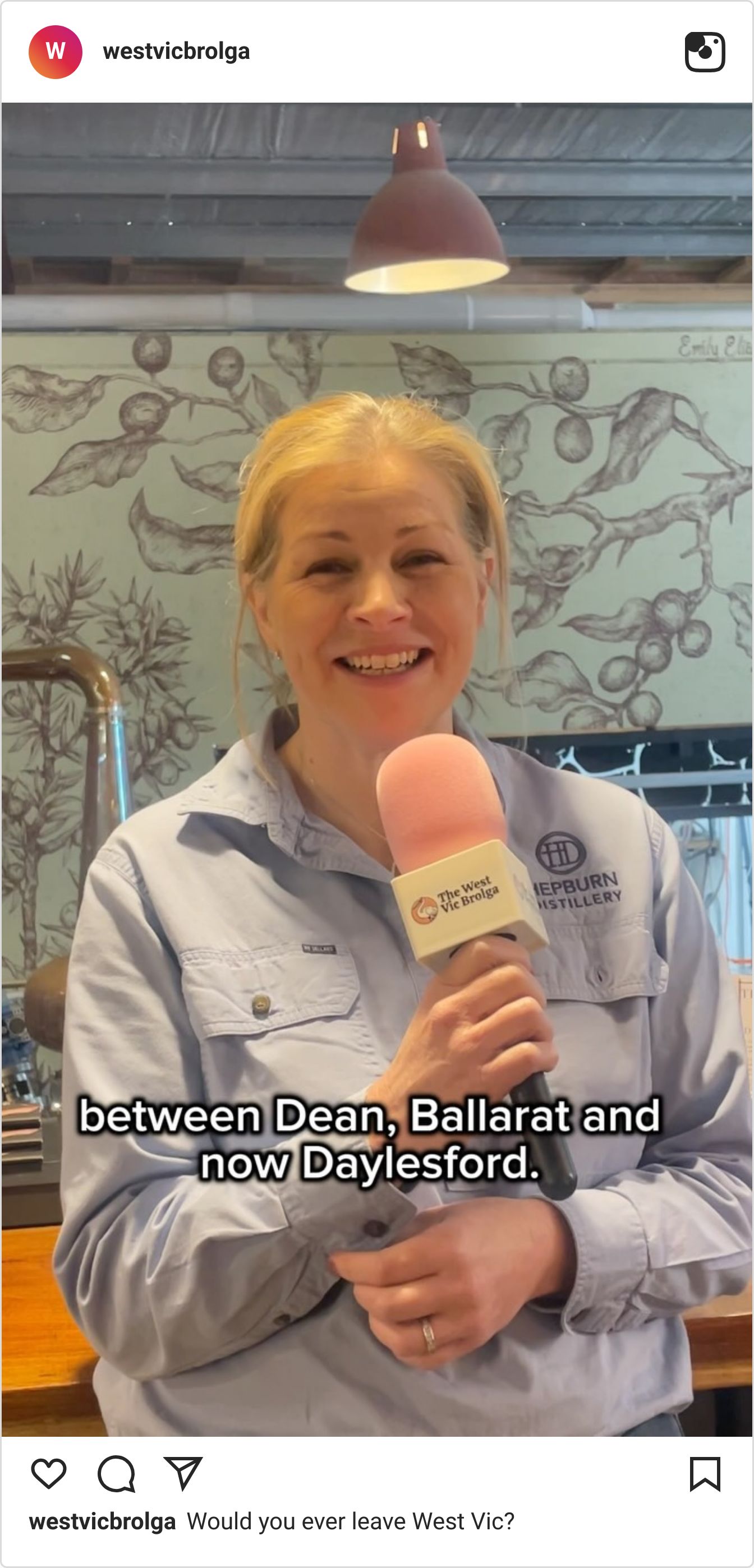
Darcie asked Daylesford locals if they would ever consider leaving West Vic. Check out the video below to hear what they had to say.

Thanks for reading today’s newsletter folks.
As always, please get in touch with any thoughts, comments, feedback or news tips you have for us. Just reply to this email.
If you want to stay up to date between editions, you can follow us on TikTok, Instagram and Facebook.
Cheers,
Zara