
⏱️ This edition of the West Vic Brolga newsletter is a five-minute read.
👋🏻 Hey Brolga readers, Darcie here today! Hope you’re doing well.
I learned a whole lot about birds and revegetation this week, speaking to community groups and ecologists on the ground working to restore native vegetation. Spoiler alert: they have to use seeds with special genetic adaptions to deal with the warming weather.
The infamously treacherous West Vic roads were also on my reporting agenda, and whether budget promises on the state and federal level would be enough to fix the problem.
Lastly, but by no means least, I had a chat with a co-founder of the Ballarat Beard and ‘Stache Competition. It’s as weird and wonderful as it sounds.
Zara also unpacked a few things about Dairy Australia’s Mid-year 2026 Situation and Outlook Report. Plus, she had a look at volunteers in Warrnambool looking to harvest local gardens to hopefully create one tonne of olive oil.
📰 Quick hits:
Zara’s latest stories 🗞️
Western Victoria has emerged as one of the biggest drivers behind a rebound in national farmer confidence, despite 97 percent of dairy farms in the region being affected by extreme weather in the past year. Dairy Australia’s Mid-year 2026 Situation and Outlook Report surveyed 600 farmers across the country including western Victoria.
Despite enduring extreme weather such as drought, bushfires and floods, confidence across the country’s dairy sector has improved, supported by easing fodder costs and stronger-than-expected profitability. The report found:
Seven out of 10 farmers described the past year’s weather conditions as severe.
Urea prices surged more than 120 percent.
Twenty-six percent of farms reported being in an “expansion phase”, with 38 percent of farms nationally having increased their herd sizes in the past year.
Highs and lows: Nationally, four in five dairy farmers are now positive about the future of their own business, while 63 percent are optimistic about the industry overall.
The report said south west Victorian dairy farms recorded the lowest levels of directly grazed pasture - grass eaten by cows - in almost 20 years of Dairy Farm Monitor data, forcing many businesses to rely heavily on supplementary feeding like grain or hay.

More than 900 kilograms of overlooked backyard olives were rescued across Warrnambool last year and turned into more than 140 litres of oil, given back to locals who helped gather them.
This year, volunteers behind the effort are hoping to crack the tonne.
What’s going on: Food security organisation Fruit Rescue is bringing back its community olive harvest for a second year, encouraging residents to host picking parties and turn unwanted fruit into locally pressed olive oil.
“So last year we decided to give it a crack and ended up with 913 kilos, which blew us away.”
A big three days: The harvest, taking place this weekend, will see residents pick olives on Friday and Saturday from trees in Warrnambool, Koroit and Port Fairy before dropping them off on Sunday at community collection points in each town.
“This is the second time that we're doing the olive harvest, and this year we're flipping the script a little bit and encouraging people to have their own picking parties and collect their olives and drop them to us,” she said.
Join in: About 20 collection sites and 30 volunteer pickers have already registered for this year’s harvest.
Groups can register on the Fruit Rescue website.


Darcie’s latest stories 🗞️
The eucalyptus trees being planted across Western Victoria might look the same as they always have, but the seeds they're grown from are being collected further and further north as ecologists try to adapt the region to the reality of a hotter and harsher future.
Movement behind the plants: Local organisations like Fifteen Trees and Nardoo Hills in north-west Victoria, owned by Bush Heritage Australia, are leading restoration efforts to rejuvenate grasslands and temperate woodlands.
🌿 Revegetation: Revegetation is the practice of re-establishing native plants, shrubs and trees on land that has been cleared, damaged or otherwise disturbed. By restoring these landscapes with native plants, it creates important habitat and food sources for native wildlife, as well as a more robust ecosystem.
🌱 Seeds of change: Recent climate modelling from the state government indicates Victoria will get drier and hotter, with increased drought.
Research like this is changing how local revegetation projects are delivered, with ecologists selecting plants with increased climate-resilience.
Give me an example: Nardoo Hills is a nature reserve owned by Bush Heritage Australia home to a range of native eucalyptus trees, such as Grey Box and Yellow Gum.
Healthy Landscape Manager Dr Daniel Nugent has managed Nardoo Hills for four years and told the Brolga there has been “really serious dieback” of eucalyptus in the region because of the impact of climate change. Dr Nugent said these changes mean a careful selection of seeds and plants are used, to ensure what is planted can sustain a heating environment.
🌳 Locals know best: Fifteen Trees founder Colleen Filippa and her team liaise with community groups to source local revegetation sites and nurseries.
🗣️:“What nurseries are doing now is they’re putting the same species in, but collecting seeds from further north for things like Eucalyptus and Banksia, because it’s the same species but they’re slightly more attuned to a drier climate.”

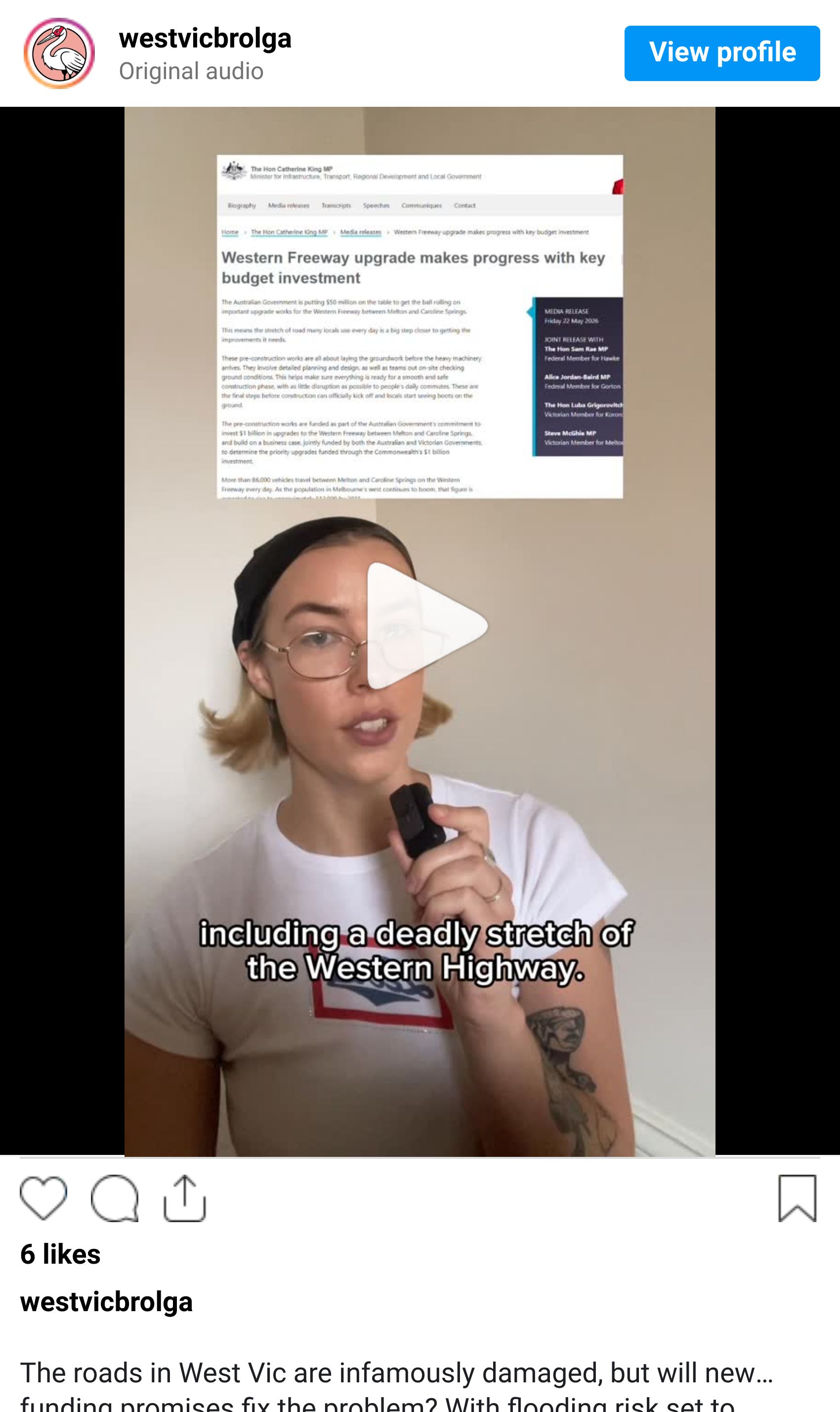
Work on the Western Highway between Buangor and Ararat will begin before the end of the year, as the infamous “death stretch” looks set to be the focus of a large funding announcement from the state government.
❓What happened: This week Catherine King, Minister for Infrastructure, Transport, and Regional Development announced works to duplicate portions of the Western Highway were going ahead after funds totalling over $1 billion were allocated in both the Federal and State budget.
Minister King said 55 kilometres of the road had already been duplicated as part of a broader program, and this new project would duplicate a following 12 kilometres and introduce an extra lane.

For the last decade, a competition has been hunting for the best beard and moustache in West Vic - and that includes facial hair that’s been crocheted or converted into a running gold mine.
❓What happened: As part of the Heritage Festival in Ballarat, Hop Temple hosted the 10th annual Ballarat Beard & Stache Competition on May 23rd. The competition has six categories.
👥 What people said: Jake Warren works as an operating theatre technician, but he’s also the event organiser and co-founder of the Ballarat Beard & Moustache Union (BBMU) alongside Brayden Dorney. It was the City of Ballarat that approached the BBMU a decade ago to participate in the Heritage Festival Weekend.
🗣️: “We love the community we’ve formed”, said Warren. “Competitors come from all over the state and country. We love how many people get together and have fun”.
Beard beginnings: The BBMU was founded in reaction to several clubs popping up around the country. Some of the beards reach lengths over a metre, and the annual competition creates a ripe platform for creativity.
“Last year, we had a guy enter the freestyle category with a running gold mine in his beard. It had a pump, running water and a mine.”
🗣️: “People love how inclusive it is, it’s so many different sorts of people getting together. Doesn’t matter if it’s a big beard, small beard, male, female.”


On Your Feed 📱
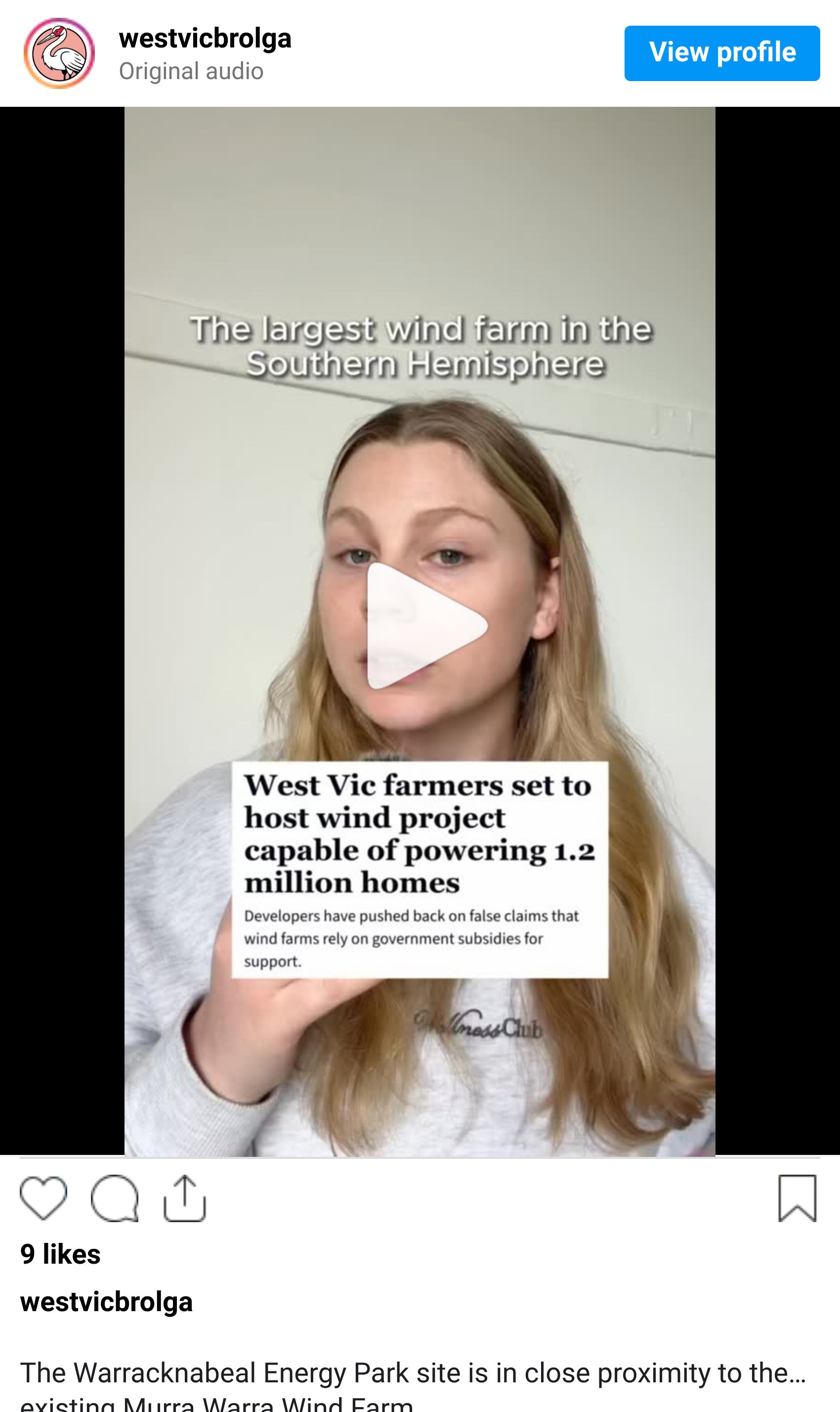
Zara explained a few things about the Warracknabeal Energy Park 🍃 The project would deliver more than 1.5 gigawatts of renewable energy annually - enough to power up to 1.2 million homes and supply 12.5 percent of Victoria’s future energy needs.
And I further unpacked a few things around the recent roads funding announcements for West Vic 🛣

Thanks for coming along for the ride today, folks.
As always, please get in touch with any thoughts, comments, feedback or news tips you have for us. Just reply to this email 💌
Cheers,
Darcie