
⏱️ This edition of the West Vic Brolga newsletter is a five-minute read.
👋🏻 Hello Brolga readers, Zara back with you for the Friday edition.
Big thanks to Darcie for holding down the fort in my absence.
In today’s newsletter, we’re taking a look at the news around the H5N1 bird flu strain reaching Portland, as well as some stories from Colac Otway and Corangamite shires.
Meanwhile, Darcie spoke to Craig Henderson, a fifth-generation farmer seeking to host wind turbines on his property. He’s spent the week in Melbourne with a 12-person delegation of regional Victorian farmers and community leaders. They’re chatting to MPs to offer a rural, lived-experience perspective on renewable energy.
🤔 On Wednesday, we had some local trivia questions in the newsletter to put you to the test. The answers are here, how did you go?
If you’re considered a bogan in Ballarat, what slang term do locals use?
Westie!
Which Australian Prime Minister was born in Creswick?
John Curtin
What’s historically significant about Johnny Alloo in Ballarat Central?
The restaurant is named for Johnny Alloo, a Chinese immigrant in the 1890s that opened Australia’s first recorded Chinese restaurant, located in Bakery Hill.
Which famous actor was born in Horsham?
Portia de Rossi
How do longtime locals pronounce Daylesford?
Some especially old-time locals say “darls-ford”, whereas it’s generally said “dails-ford”
Zara’s latest stories 🗞️
A dead crested tern near Portland has tested positive for H5N1 bird flu - Victoria's first case of the strain that has killed large numbers of wild birds and some mammals internationally.
Not feasible to wipe out: Australia first recorded the H5 strain in Western Australia last month, with 25 other cases now recorded across South Australia, New South Wales and Queensland.
The federal government, alongside state governments, has ruled out being able to fully eradicate the disease in wild birds.
Based on international data, state chief veterinary officer Dr Graeme Cooke said the H5 variant “has been known to cause large numbers of deaths in wild birds and some mammals”.
🗣️ “Further genetic testing is underway at CSIRO’s Australian Centre for Disease Preparedness at Geelong to formally confirm this result,” Cooke said.
What does this mean? The state government has now enacted its State Emergency Animal Disease Response Plan, which means federal and interstate jurisdictions will work together to develop the most efficient approach to minimising the spread of the disease.
🗣️ “Our plans aim to limit impacts where possible, particularly on our most threatened species, while also supporting our farmers and reducing risk to domestic and commercial poultry,” Cooke said.
Help stop the spread: Agriculture Victoria encouraged early and accurate reporting from residents if they saw something.
Locals should report clusters of 5 or more sick or dead wild birds of any species, anywhere in Victoria.
Residents should also report just one sick or dead wild seabird, waterbird, shorebird, bird of prey or mammal such as a seal, sea lion or dolphin, as mammals are also at risk.
The Department of Environment, Energy and Climate Action will assess each report and decide if testing is needed.
🗣️ “This applies at the coast, in parks and nature, at home, on farms and by water,” Cooke said.
How about farms? Poultry, game meat and eggs are still safe to eat when properly handled and cooked.
Poultry farmers should ensure sheds, yards and equipment are kept clean, quarantine new birds and limit contact between poultry and wild birds.
🗣️ “Always make sure your footwear is clean and wash your hands before and after handling your birds or eggs,” Cooke said.
🗣️ ‘If you find sick or dead wild birds, don’t touch them or try to collect them as this can risk more disease spreading. Instead, record what you see, the location and take photos or videos, and report.”

Colac Otway Shire Council is pushing the state government to provide disaster recovery funding to rural councils up front, rather than reimbursing costs after emergencies, arguing it was left out of pocket after January's bushfires and flood.
What happened? Councillors unanimously backed a motion at Tuesday’s July meeting to take the proposal to the Municipal Association of Victoria in October.
The motion, moved by councillor Phil Howard, calls for the establishment of an annual up-front emergency response fund for rural councils in bushfire, flood, drought and severe storm-prone areas to support the community and increase staff training and equipment upgrades.
🗣️ “We know we're going to suffer natural disasters more frequently and more severely,” Howard told the meeting. “So if we have funds up front, we can prepare a lot better.”
The background: Council officers said the final cost for the recovery of the Otways bushfires and Wye River flood were still being assessed, but council had received a $750,000 council support fund, primarily for fire recovery activities and the restoration of council infrastructure and services.
The council was also funded to hire a community recovery officer and a dedicated hub at $775,000, covering the cost of recovery initiatives for affected residents and dedicated recovery staff.
Reimbursement through the federal Disaster Recovery Funding Arrangements is still being assessed.
What’s that? The DRFA is a joint system between the state and federal government to share the cost of funding recovery efforts in disaster-affected areas of the country.
The National Emergency Management Agency runs the program at the federal level, while state bodies like Emergency Management Victoria manage local claims.
Footing the bill: Councillor Chris Potter said the shire’s bushfire-prone landscape meant emergency funding was a “big ticket item” for rural councils.
🗣️ “Councils are always short-changed after some sort of disaster and emergency, and councils are always at the forefront in the fight against and the recovery from disasters and emergencies,” he said.
🗣️ “We know what it's like and what's required to recover from them and to try and mitigate the occurrence of them … and we need the money to do that.”


Darcie’s latest stories 🗞️
Farmers who host, or are looking to host, wind turbines on their properties are joining a delegation to parliament in Melbourne this week. They will meet MPs from all sides ahead of the state election in November to counter a ”very noisy minority” drowning out the rural voice on renewable energy.
Craig Henderson, a fifth-generation Wimmera grain farmer, is one of them. But he says the cost of speaking up has included a threat against his life.
❓What happened: Henderson is looking to set up his kids and grandkids for success to stay in the region by hosting wind turbines for the proposed Wilkur Energy Park, 11km south-west of Birchip. Farmers can receive up to $40,000 per year, per turbine, depending on the size.
🗣️: “I have two sons and a nephew on the farm,” Henderson told the Brolga, adding a note on grandchildren with a laugh, “the seventh generation is pretty keen to start as well.”
Henderson is part of a delegation of 12 farmers and community members from across regional Victoria. They’re heading to parliament to explain how they believe renewable energy can strengthen farms and regional communities.
Some background: Henderson farms in the northern Wimmera and southern Mallee, cultivating wheat, barley, lentils, hay, canola and peas. He’s been actively working the land since 1979, and he’s seen farming change and evolve significantly over this time.
“Dad used to be able to do all the bookwork and keep it in a shoebox,” Henderson said. Since then, the market has expanded globally and farm management styles have drastically shifted.
This includes protecting operations against “variable weather conditions”.
“Over the last 40 years, we’ve always looked at diversifying our income to mitigate risk to our farm business.
“[Hosting wind turbines is] a totally separate, diverse income on our farm that’ll help our business moving forward, but it also gives an opportunity for the community to have funds come into it.”
Taking action: Henderson and his peers are spending two days in Melbourne meeting with MPs.
🗣️: “I want to come down here, talk one on one, give a balanced profile on what’s really going on out there,” Henderson said. “The minority is very noisy, the same people, same protests saying the same thing.”
A range of issues: Wind farms, solar farms, batteries, new transmission infrastructure and mining projects are becoming increasingly intertwined across West Vic. It can be difficult to find straightforward answers to local concerns about insurance liability, visual amenity, public transparency and decommissioning responsibilities when projects reach retirement age.
New guidelines from VicGrid outlines a range of solutions that push developers to avoid contractual clauses that restrict discussions between neighbours and to deliver legitimate community benefits.
Data from research firm 89 Degrees East earlier this year found 66 percent of 202 residents polled in Western Victoria support the transition to renewables, with 13 percent opposed and 20 percent neither support nor oppose. Despite this, the same people polled were under the impression less than half of the community (46 percent) supported the shift.
Henderson said everyone is entitled to their opinion, but the debate has become muddied with disinformation and political motives.
“We’re trying to make our farm strong for the future, they’re trying to get reelected.”
Why does it matter? Henderson said “small communities are shrinking” and believes large-scale projects, like wind farms, inject considerable benefit into the local community.
Yarriambiack Shire, where Henderson lives, is the one of the fastest shrinking shires in Victoria, and Henderson said the ability to strengthen the local economy and attract new residents would help improve schooling and business.
“It’s running out of steam, businesses have had a gutful of the antis [anti-renewable protestors] - they want more business in their towns.”
The cost of speaking up: Henderson believes people who agree with renewable energy projects in regional Victoria aren’t speaking up “because then you’re a target”.
🗣️: “I’ve had a circumstance where my daughter-in-law was introduced to someone in a post office, they said, ‘Oh, are you Craig Henderson’s daughter-in-law?’ And when she said yes, they said, ‘Well, he’ll be lucky if he doesn’t get shot’.”


On Your Feed 📱
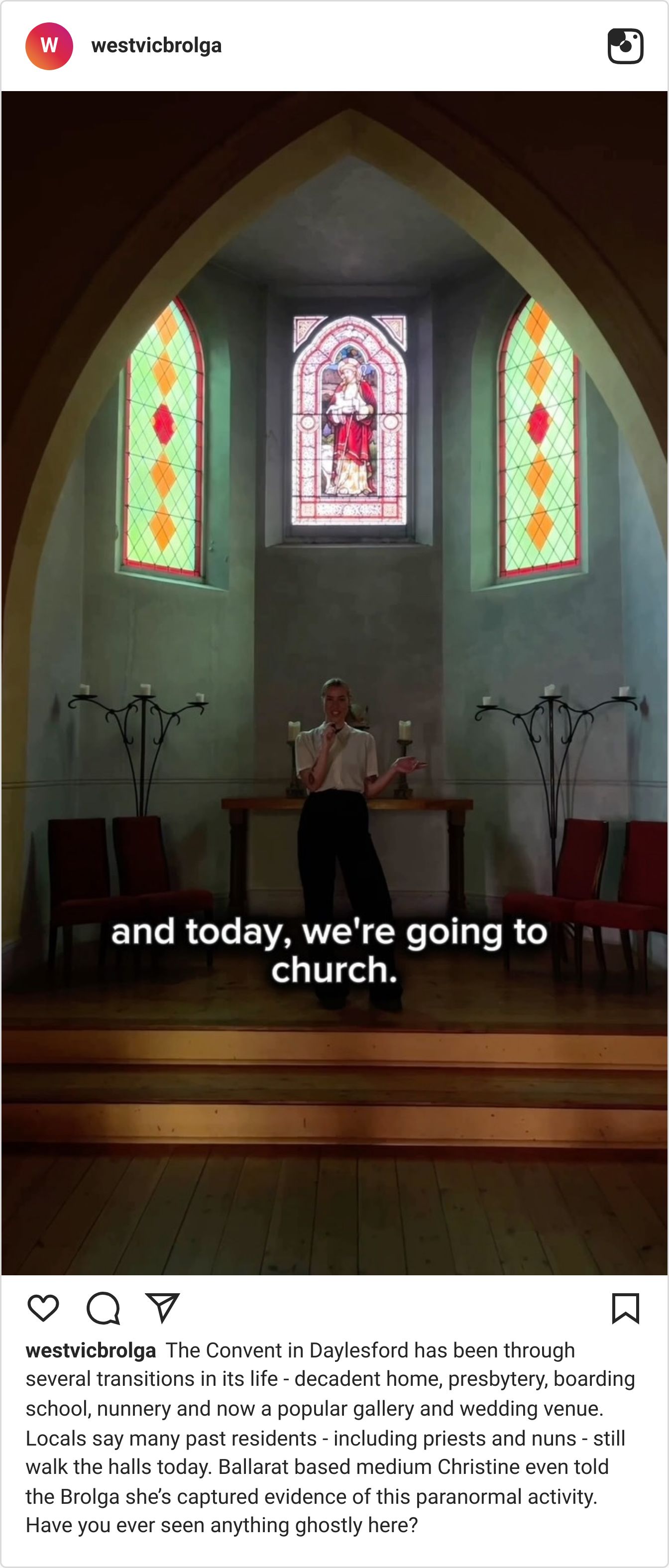
Darcie, always the brave soul, made a visit to the old Daylesford Convent to find out more of its history and to check for ghosts. Watch the video below to see how she went.
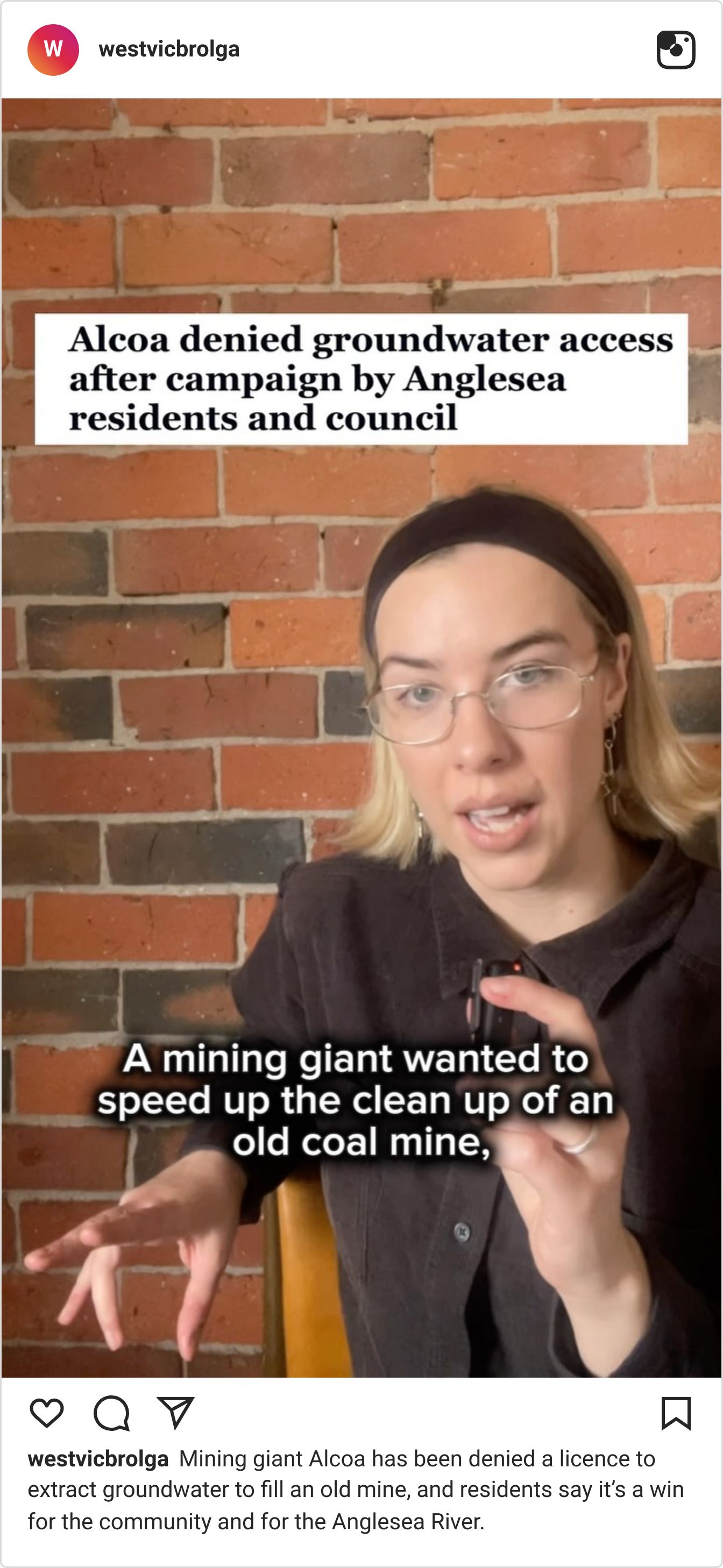
Elsewhere, mining giant Alcoa has been denied a licence to extract groundwater to fill an old mine, and residents say it’s a win for the community and for the Anglesea River. Darcie explains in the video below.

That’s all for today’s newsletter, thanks for reading folks.
If there’s ever something happening in your neck of the woods you think Darcie and I should follow, please get in touch. We’re just on the other side of this email. 📧
If you want to stay up to date between editions, you can follow us on TikTok, Instagram and Facebook.
Have a nice weekend,
Zara